Somewhere in the Night (1946): Remembering Forgotten Noir

Joseph L. Mankiewicz’s 1946 amnesia noir deserves another look.
Somewhere in the Night (1946): Remembering Forgotten Noir

Despite its status as a genre movie, Somewhere in the Night is one of the first films in the classic Film Noir period to incorporate psychoanalytic theory into its character profiles.

On the surface, George Taylor’s story is about amnesia. But Taylor’s Larry Cravat persona also represents his shadow self, the part of our subconscious mind that represses our darkest thoughts and desires.

This complexity deepens when we consider what the film is saying about the nation’s efforts to move on from the catastrophe of World War Two. In choosing to incorporate psychoanalytic theory in this manner, Somewhere in the Night suggests that America has created its own “national shadow self,” a repression of its collective grief following a horrific global war.
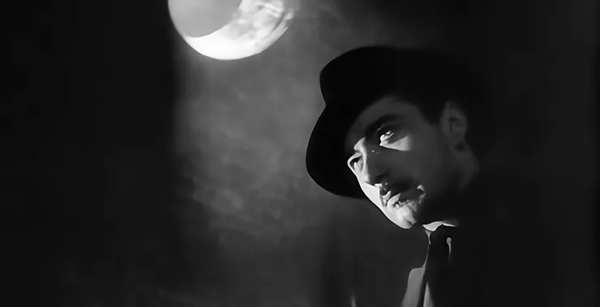
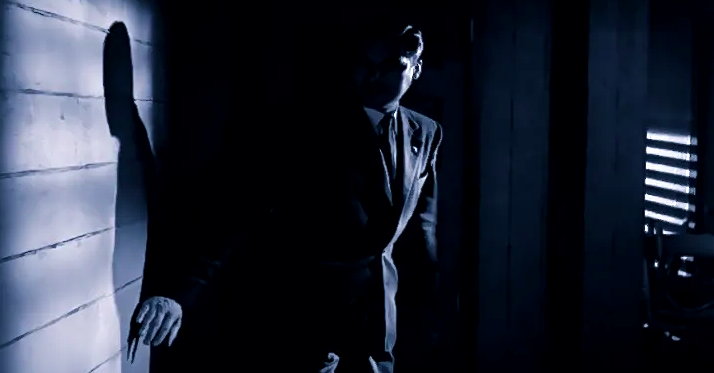
John Hodiak as George Taylor/Larry Cravat.

Like its blueprint predecessor, Dashiell Hammett’s The Maltese Falcon (1930)Somewhere in the Night relies on missing loot to drive the plot.

But as the film unfolds, we find ourselves more concerned with discovering George Taylor’s true identity than we are about the missing money. In this respect, Somewhere in the Night subverts the Noir genre while simultaneously adhering to established tropes, representing perhaps the first use of the “psychological MacGuffin.”

The film’s plot is reminiscent of novels like The Big Sleep (Raymond Chandler) (1939), exhibiting a broad lack of cohesion. Many questions are ultimately left unresolved:

  • Why did Larry Cravat / George Taylor become a thief in the first place?
  • How did Taylor know to steal the Nazi loot?
  • What did Taylor plan on doing with the money?
  • Did Taylor have a past relationship with Conroy’s daughter, or not?
  • How did Taylor go about changing his identity, especially considering he was a soldier?
  • Why is Mel Phillips friends with Officer Kendall if he’s really a gangster?

Luckily, just like The Big Sleep, the film’s atmosphere and texture more than compensates for the shortcomings embedded in the plot.

Nancy Guild as Christy Smith.

When we debate Somewhere in the Night’s position in the Film Noir canon, we must also consider its characters. Hookers, thieves, mobsters, foreigners, lounge singers, an amateur detective—this is truly Film Noir stuff.

There are no “good guys.” And yet, despite their moral failings, we identify with their predicaments. We care about what happens to them. We even root for their success. Their moral ambiguity is perfectly synonymous with the world of the film.

Fritz Kortner as Anselmo.

One of my favourite things about Somewhere in the Night are the masks on the wall of Anselmo’s fortune telling business.

This trio of blank white masks are symbols of Taylor’s character arc: the old him (Larry Cravat), the present him (George Taylor) and the person that he’s striving to become.

The number three also foreshadows the resolution of the plot: three men were involved, not just the notorious Cravat.

Margo Woode as Phyllis.

I also think that some of Mankiewicz’s editorial decisions are strange and somewhat fascinating. For instance, despite adhering to a generic formula—his film lacks a decisive Femme Fatale.

Although briefly a candidate, Phyllis is a red herring. She makes a single, halfhearted attempt at seduction and then recedes into the background, content to simply chase the money like everybody else.

Christy functions more like a companion. Any feelings that exist between her and George are latent, secondary to the search for Larry Cravat. Their romance is implied but never consummated within the confines of the film.

Make no mistake: Larry Cravat is the REAL Femme Fatale. Luring George to San Fransisco. Pulling strings behind the scenes. Seducing him with intrigue, cash and secrets. Using him to carry out a higher goal. This inversion is just one of the clever intricacies that sets this film apart from its contemporaries.

John Hodiak as George Taylor/Larry Cravat.

Somewhere in the Night is yet another post-war Noir that interacts well with Marxist theory. In this respect, it has much in common with Jules Dassin’s Night and the City (1950) and Carol Reed’s The Third Man (1949).

Night and the City’s Harry Fabian pursues wealth with a blind, obsessive determination—until he ultimately becomes the victim of the very economic system he was so eager to join in the first place. Similarly, as a racketeer in occupied Vienna, The Third Man’s Harry Lime is just as corrupt as the fascist regime his countrymen fought and died to eliminate.

Unlike his counterparts in these films, George Taylor manages to survive. But Larry Cravat—his thieving wealth-obsessed alter-ego—does not. The only cure for Cravat’s winner-take-all capitalism is thus a figurative death.

Richard Conte as Mel Phillips

The film also questions the relationship between memory and identity. Do people ever really change? Are we merely the sum of our past? If the memory gets erased, is the “self” erased with it?

Ultimately though, Somewhere in the Night speaks to what lies ahead in the broader post-war period.

This reading frames the film as a meditation on the limits of cultural memory, and the dangers of forgetting a war in which millions of innocent Jews were systematically exterminated.

Through Taylor’s story, the film seems to say, “forget the past at your own peril,” a message that has only become more relevant in the seventy or so years since its release.

© 2026 Debtford Press