The Public Enemy (1931): Pre-Code Beer and Blood
Any notion that 'The Public Enemy' is some kind of Pre-Code docudrama can be dispelled by simply watching it.

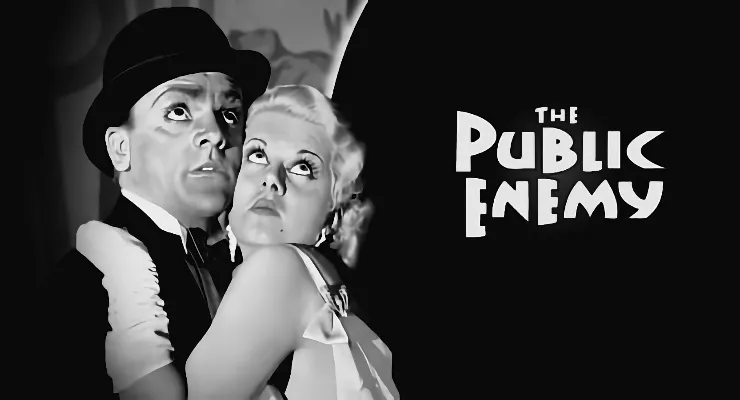
For a ninety year old film, The Public Enemy’s opening credits are striking. Live action shots of the cast are superimposed next to their names, not unlike the info-graphics shown during player introductions at the outset of a modern sports broadcast.
Any notion that The Public Enemy is some kind of docudrama can be dispelled by simply watching it. Although it uses historical events as framing devices, the film contains no factual information, nor are its characters close facsimiles of any real-life gangsters.
While it’s impossible not to stumble over names like Baby Face Nelson, John Dillinger, or Al Capone when one reads about Pre-Code gangster movies, THIS film provides little biographical content of any of the aforementioned crooks.
The idea that The Public Enemy somehow glamorizes organized crime is also patently absurd. Watch it closely, perhaps without the sound. What exactly about its visual composition glorifies criminality? The violence isn’t stylized. The music is undramatic, doing little to punctuate the actions of the gangsters or glorify their crimes. The criminals are never shot from below or made to look superhuman. There are no visual effects, no fantastical imagery, no aesthetics that make allusions to Christ or any of the Greek or Roman Gods. Every set piece ends in mishap or tragedy, and there’s not a single instance in which a gangster performs a redeeming act of bravery, heroism or strength.
And yet, there’s a strange dichotomy at work here: The Public Enemy‘s anti-crime message is also rather thin, consisting only of a text-based prologue and epilogue worded like a heavy handed public service announcement.
If the film truly intended on denouncing organized crime, this messaging would have been inherent throughout the narrative itself, woven into the story in such a manner that these overtly sanctimonious title cards would have been rendered quite unnecessary.
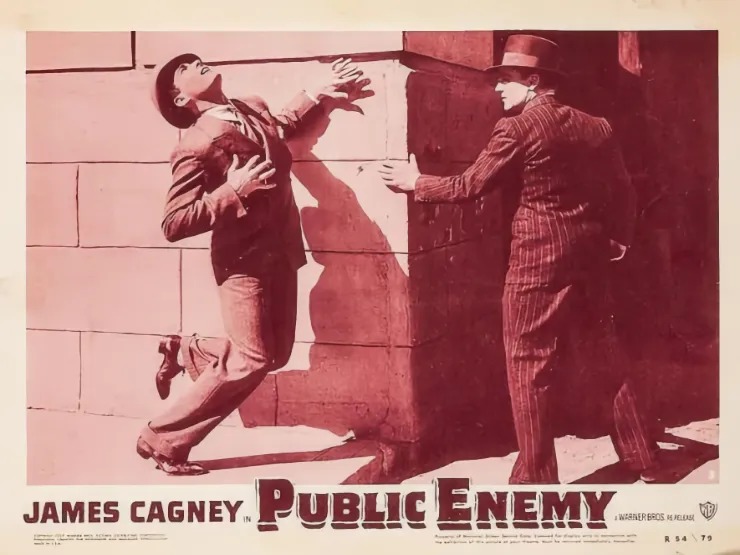
Although it lacks a fully realized symbolic order, The Public Enemy deploys a number of individual symbols to deepen its narrative resonance. Consider the following:
- The Pocket Watches: The stolen package Matt and Tommy sell to Puttynose (Murray Kinnell) as kids contains a total of six pocket watches. Six represents the number of years left until the failed robbery that makes Matt and Tom accessories to murder, thereby cementing their respective fates.
- The Stuffed Bear: The huge stuffed bear that Tommy mistakenly shoots during the robbery represents the fate of all predators. Here, the film foreshadows Tom’s death, as he too will eventually be killed by a superior predator. Tom’s inanimate corpse, swaying in his mother’s doorway, also closely resembles that of the aforementioned bear.
- The Grapefruit Scene: While the infamous scene mainly serves to illustrate Tom’s tendency to violence and his growing sense of infallibility, it also symbolizes his rejection of the family unit and domesticity. Tom’s childhood was unhappy. His household was a stifling, abusive environment. The moment Kitty’s (Mae Clarke) expectations begin trending toward marriage, Tom violently humiliates her with the very food she uses to convey her domestic ambitions.
- The Rain: As a vengeful Tom infiltrates his rival’s hideout, he is completely drenched by torrential rain. He sustains serious wounds in the shoot-out and stumbles back outside, eventually collapsing in the flooded streets as the rain continues pouring down. In addition to being an iconic early Noir sequence, these scenes represent a figurative baptism. By avenging Matt’s death, he makes good on a blood oath, absolving his sins. His repentant deathbed apologies only proves this point further.
But the most important symbols in the film occur outside the confines of its story, in its text-based foreword and afterword. For more on this, keep reading.
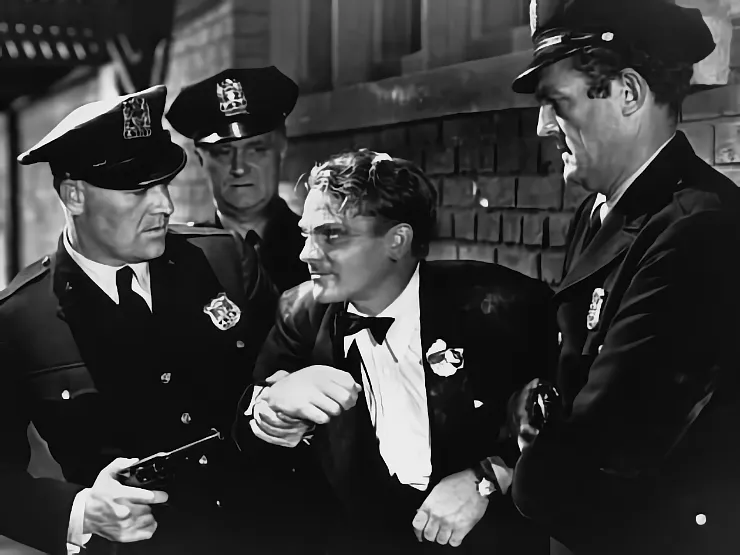
Movies that announce their intentions are usually lying. Despite its over-bearing mission statement, The Public Enemy does little to either glamorize or condemn the criminal lifestyle.
What IS glamorized, however, is the acquisition of wealth. Within the context of the film, acquiring wealth means dispensing with the drudgery of the normal 9-5 job exemplified by Tommy’s brother Mike (Donald Cook). Wealth also provides the freedom to reject the status quo: normal, everyday things like getting married or joining the army or even paying taxes. It grants permission to indulge in vapid material pleasures, even in a time of general economic strife. Once their racket begins bearing fruit, Tom and Mike are never far away from expensive clothing, cars, food and women.
Although they have more in common with Paddy Ryan (Robert O’Connor), Matt and Tom model themselves after Nails Nathan (Leslie Fenton) instead. In this Marxist/Feminist reading of the film, Paddy represents the exploited proletarian working class, whereas Nathan represents the managerial bourgeois elite.
The Public Enemy is thus a Trojan Horse. Using its moralizing foreword and afterword, it tries to disguise itself as an anti-crime polemic. But in reality, The Public Enemy is a pro-capitalist, pro-corporate film released at a moment in history when the hardships of the Great Depression were lending strength to progressive political movements like socialism, collectivism and communism, ideas that threatened traditionally American notions of free markets and individual exceptionalism.
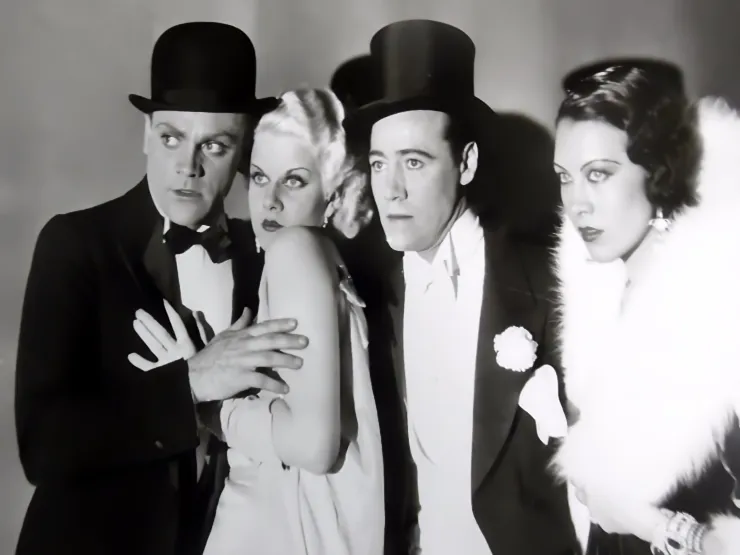
The Public Enemy‘s main value is as a historical and a cinematic artifact. Gangster movie fans will appreciate its canonical elements. Film Noir enthusiasts will take interest in the Puttynose murder, the rain scene, and James Cagney’s overall performance as an early Noir anti-hero.
Notable attributes aside, enjoying The Public Enemy might not be possible for every viewer. Despite its cradle-to-the-grave type story, plotting is virtually absent. Every time we sense a plot twist coming, it never actually happens. Tom’s character arc commands most of our attention, but in the end his death adds up to nothing. When the credits roll, we’re left wondering if anything that happened in the film really matters. In my opinion, these deficiencies are the result of some peculiar absences:
-The Public Enemy has no specific antagonist.
-No police are present in the film.
-The rival gang that murders Tom appears only in expository dialogue.
-Puttynose poses no real threat and is killed just after his re-emergence.
Films populated by criminals still require a villain. As a genre, Film Noir understands this perfectly. Imagine The Third Man (1949) without Harry Lime. Imagine Michael Mann’s Thief (1981) without Leo. You can’t do it.
The most interesting aspects of the film are thus purely metaphysical: the ideas that exist outside the movie are more compelling than those present on the inside.
To truly enjoy The Public Enemy, my suggestion is to watch it in conjunction with other Pre-Code gangster films, or perhaps in tandem with articles like this one.
© Copyright Debtford Press 2026. All Rights Reserved.