Little Caesar (1931): A Slice of Early Noir
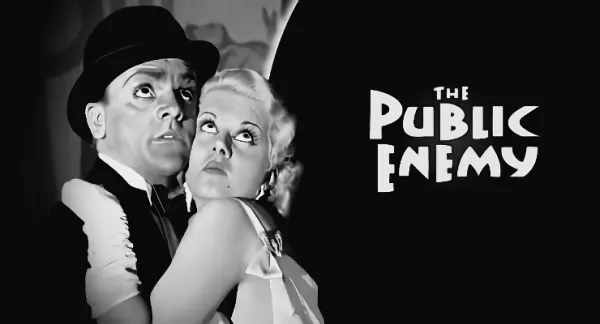
Watching 'Little Caesar’ from a contemporary point of view reminds us how little gangster films have changed across the years.

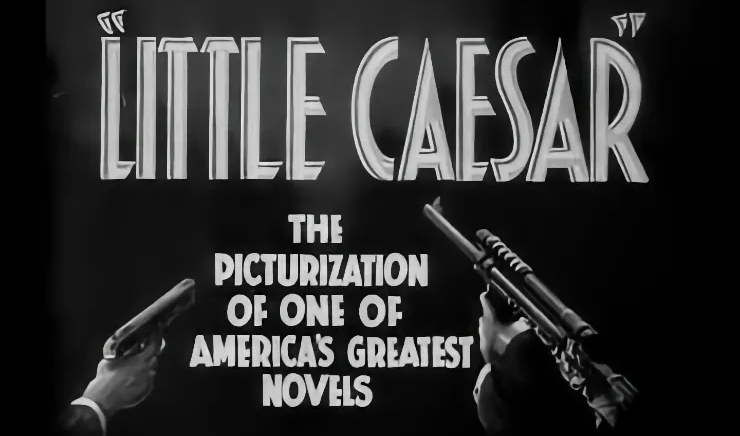
Watching Little Caesar from a contemporary point of view reminds us how little gangster films have changed across the years.
When compared with mafia movies of the 1970’s, urban gangland films of the 1990s, and countless thrillers in the decades since, we realize these story lines really haven’t progressed at all.
What HAS changed is the plot. The plotting in contemporary gangster films is much more complicated, often to the point of detriment. Disagree? Create a three sentence synopsis of films like Snatch (2000), Gotti (2018) or The Irishman (2019). Impossible!
Nevertheless, watching Little Caesar reminds us there are really only 4 types of gangster stories:
- The mobster that tries to “get out.” (The Godfather, 1972)
- The gangster that flies too close to the sun (Scarface, 1983) (Public Enemies, 2009) (American Gangster, 2007)
- “This town ain’t big enough for the both of us.” (Lucky Number Slevin, 2006)
- The gangster turned informant (Donnie Brasco, 1977) (The Departed, 2006) (Goodfellas, 1990).
This film is firmly in category #2. Had Bandello gone unpunished, but wound up bitter and alone, the film would have been much more compelling. But given its cinematic era, this lack of depth can be forgiven.
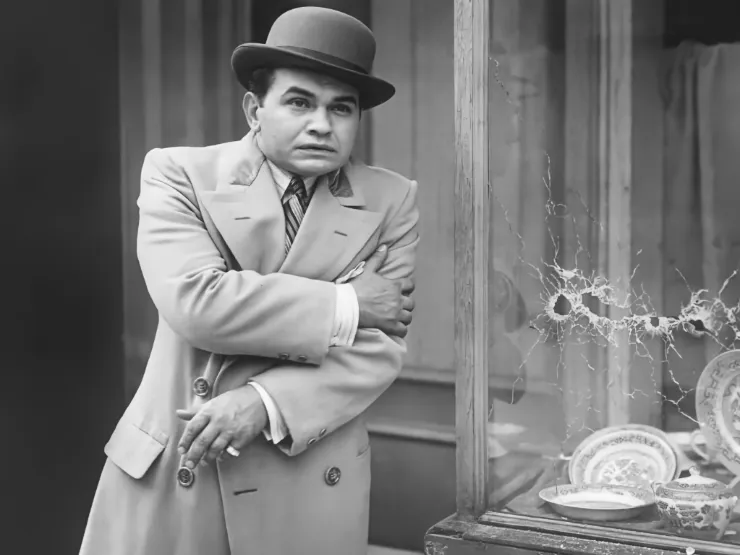
It’s often difficult not to snicker at Robinson’s peculiar accent and manner of speaking. I suppose it never occurred to me that the “gangster voice” so frequently lampooned over the decades actually originated from a single source. Even James Cagney, one of Robinson’s contemporaries, pretty much ripped him off.
Cartoonish voice aside, Robertson plays the role with dead earnestness. There are no moments of levity. No humour at all. Forget you’re watching a classic film and you quickly realize that Rico Bandello is a stone cold psychopath.
Like most of the movies from this period, the characters seem underdeveloped compared to the films of today.
We know nothing about their families, origins, or activities beyond the confines of the film. We are not privy to their internal thoughts. There are no diaries, monologues, no introspective moments when they peer into a mirror or a pane of glass. There are no attempts to show us their complicated psychologies using dreams or exposition or hints of sexual proclivities.
And yet, despite this lack of complexity, the movie somehow works. Maybe it’s refreshing to watch a film that stays in its lane, a story that allows its characters to just be “bad” without explaining why. Perhaps we need to return to less phony means of telling stories.
My main complaint is with the movie’s final scenes, which feel rushed and unsatisfying. Rico should have had one last chance to escape or survive or even win the battle. The chase scene should have been longer and more suspenseful. His death should have conveyed a more compelling message. Instead, Rico’s self-referential rhetorical question, posed in the third person, comes off slightly…lame.
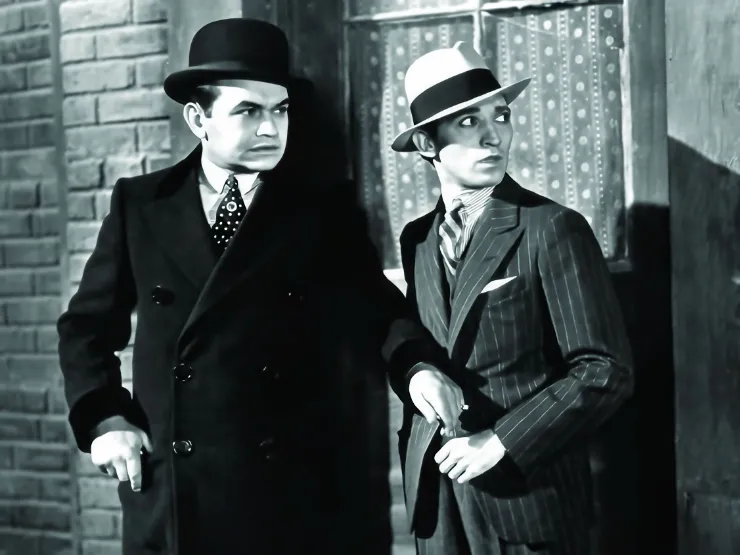
Little Caesar’s short episodic scenes function like chapters in a novel. At the outset, the narrative perspective alternates between Joe and Rico, gradually shifting as the plot unfolds until the lens is aimed entirely at Rico.
My favourite aspect of the film is the robbery montage. The overlapping fade transitions create a dreamlike quality, as though we’re watching an event so seismic, for a second it disrupts the normal flow of time.
Although brief, this sequence is masterful, almost psychedelic. In that instant, the film transcends its idiom and becomes something quite different, foretelling surreal atmospherics like those featured in John Boorman’s Point Blank (1967) or Burt Kennedy’s The Killer Inside Me (1976).
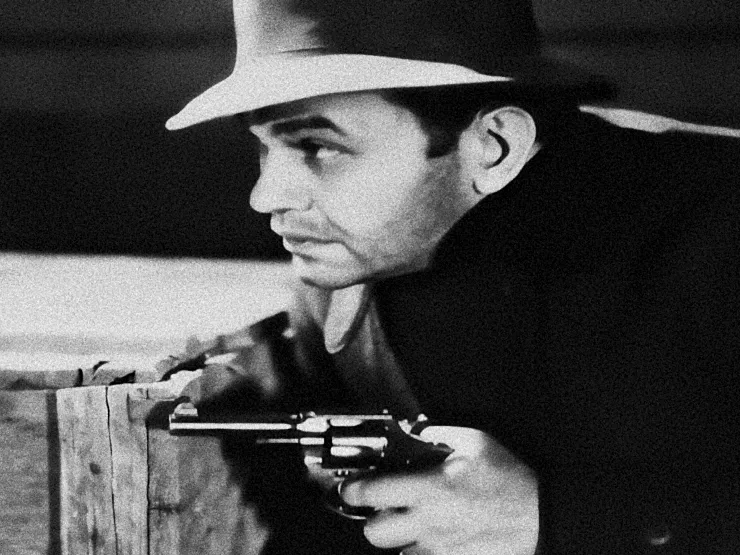
Ultimately this film is about two friends that diverge onto opposite paths. Although the films are quite different, there would be no Dog Day Afternoon without this movie.
Another crucial difference between Little Caesar and the gangster film revival of the 1970’s pertains to place and setting. In films like Mean Streets, Goodfellas and The Godfather, the pathway to criminality is either the family unit or the extended family represented by the neighbourhood. The characters that populate these films are essentially born into pre-existing systems: their fates are sealed. And thus these stories are generally concerned with how to dominate or escape these systems, with how to alter one’s fate.
But in Little Caesar, Joe and Rico are outsiders. They re-locate to Chicago and volunteer to join the mob. Rico operates completely by his own initiative, robbing the dinner theater, executing the commissioner, muscling in on territory that was completely foreign to him only a few months earlier. Given these details, and also the ethnicity of the film’s protagonists, it’s therefore possible to read the film as a veiled condemnation of open immigration.
Another interpretation is to read the film as a criticism of America’s global status as a “melting pot.” Maybe the American dream is a lie. Maybe immigrants actually aren’t given opportunities to succeed, despite the nation’s reputation as a welcoming place.
A final reading frames Little Caesar as a sort of existential nightmare. Rico lands in Chicago as a nobody. He rises up from the dust of the depression, conquering the underworld, vanquishing his enemies one by one by one. But even with the city in the palm of his hand, what kind of life is Rico living? He has no friends, no girl, no hobbies, no leisure, no intellectual life at all. He’s like a well-dressed animal, stalking through the urban jungle, sniffing for prey. Every time he makes a kill, he only ends up hungrier. In the end, the success he thought would bring fulfillment and belonging sends him back to where he came from. Rico Bandello dies in the dirt, dressed like a bum, at the hands of the police. Like he always knew he would.
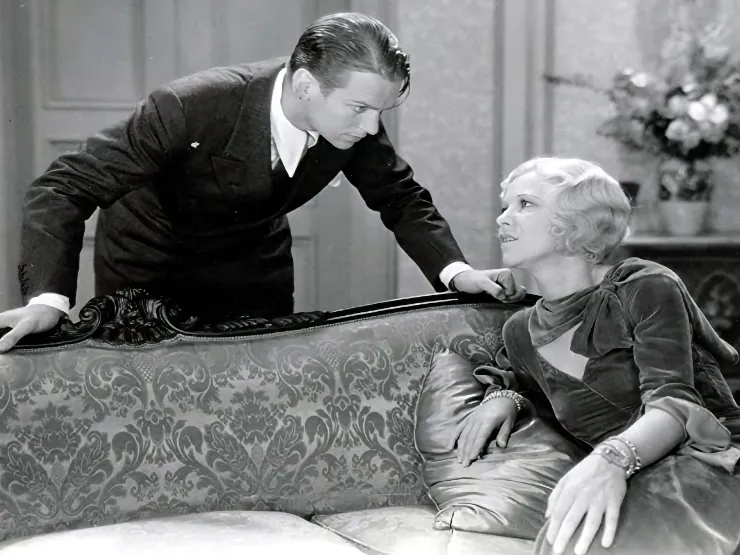
Although Pre-code gangster films were loosely based on real-world criminal syndicates, by no means did they function as cinematic documentary or even docudrama. In other words, gangster movies were pure fiction. And like all works of fiction, the question must be asked: what are these stories really about?
Given their decade of origin, the gangster films are really about the unchecked capitalism of the roaring twenties and the economic inequality the persisted long after the crash.
The upstart gangsters of these films are like perverse entrepreneurs, operating with the same ruthlessness as a Wall Street capitalist, except on the wrong side of the law. This dichotomy poses an important question: If the guys rigging the system are all crooks, is being a gangster any worse?
One can see how this cynical outlook eventually became applied to every institution, culminating in the Film Noir ethos of the 1940’s, where literally no one can be trusted. This paranoia turned inward in the 1950’s with the advent of the psychological thriller, films in which one’s own mind became the enemy. Broad assessments aside, early gangster movies asserted the “do what you gotta do” ethos echoed by many of the Film Noir characters that followed in the years that followed.
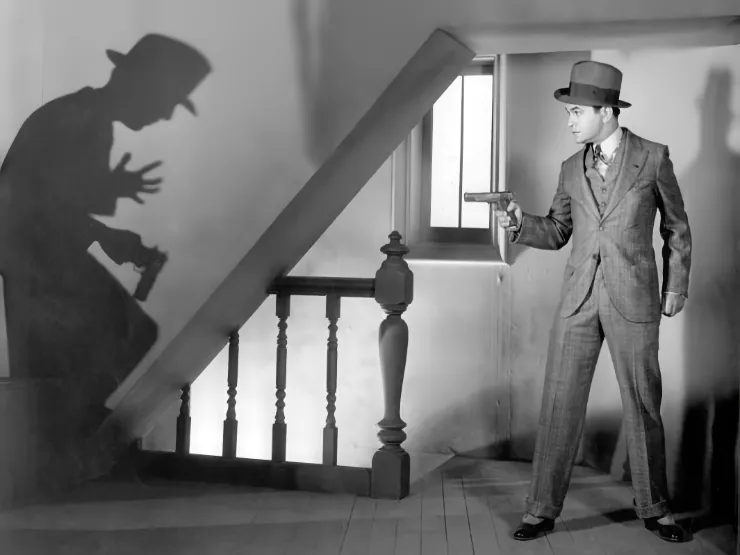
In Rico Bandello, we see the roots of hustlers like Harry Fabian, the disciplined thieves in the films of Michael Mann, and even the one man killing machines like Richard Stark’s Parker or the much more recent John Wick films. Over its brisk 80 minutes, you’ll see the origins of the gangster movie, the gangster ethos, even the gangster voice—before these tropes devolved into clichés.
That’s all for now.
See you in the movies,
Tod.
© Copyright Debtford Press 2026.